
IN ALTA 1L, ALUNBRIG® (brigatinib) Demonstrated Powerful
First-Line Systemic Efficacy1
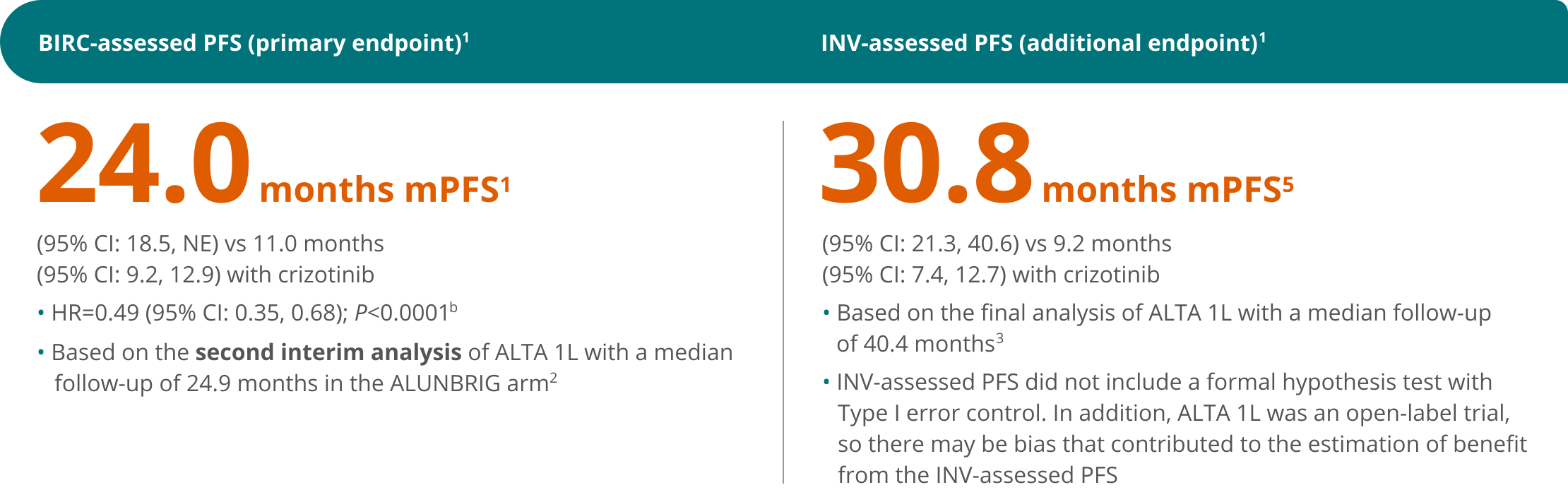
ALUNBRIG doubled median progression-free survival vs crizotinib in patients with anaplastic lymphoma kinase (ALK)-positive metastatic non-small cell lung cancer (mNSCLC), including those with brain metastases.1,2
ALTA 1L Trial Was Designed to Assess the Efficacy, Safety, and Tolerability of ALUNBRIG
ALTA 1L Was a Randomized (1:1), Phase 3, Open-Label, Multicenter Trial1,3
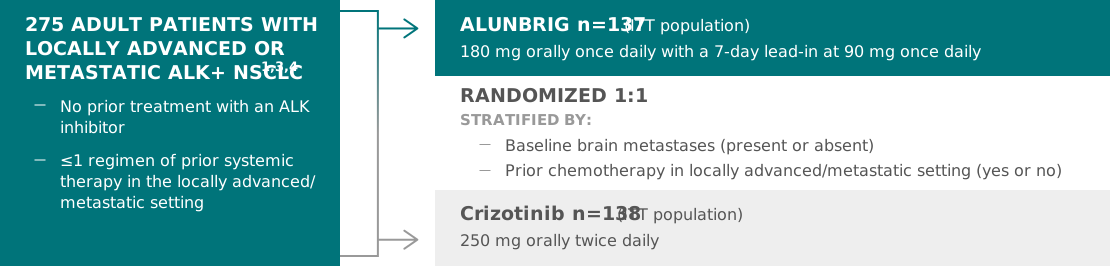
Select exclusion criteria: Patients with a history of interstitial lung disease, drug-related pneumonitis, or radiation pneumonitis.1
Treatment was continued until disease progression or unacceptable toxicity.3
Crossover from crizotinib to ALUNBRIG was permitted after disease progression. After BIRC-assessed objective progression, 44% of patients taking crizotinib (n=61/138) crossed over to the ALUNBRIG arm.3
Major efficacy outcome measure: PFS according to RECIST v1.1 as evaluated by a BIRC.1
Additional efficacy outcome measures: Confirmed ORR, DOR, intracranial ORR, and intracranial DOR as evaluated by a BIRC OS.1
Median duration of follow-up: At the time of the second interim analysis, data cutoff was 22 months after the last patient was enrolled,4 with a median follow-up of 24.9 months for ALUNBRIG and 15.2 months for crizotinib.3
The median follow-up for ALUNBRIG was 40.4 months at final analysis.5
Select Baseline Characteristics
ALTA 1L included a population reflective of real-world patientsa with brain metastases at baseline and those who were treated with prior chemotherapy2,a
Demographics and Baseline Factors Were Balanced Across Treatment Arms2
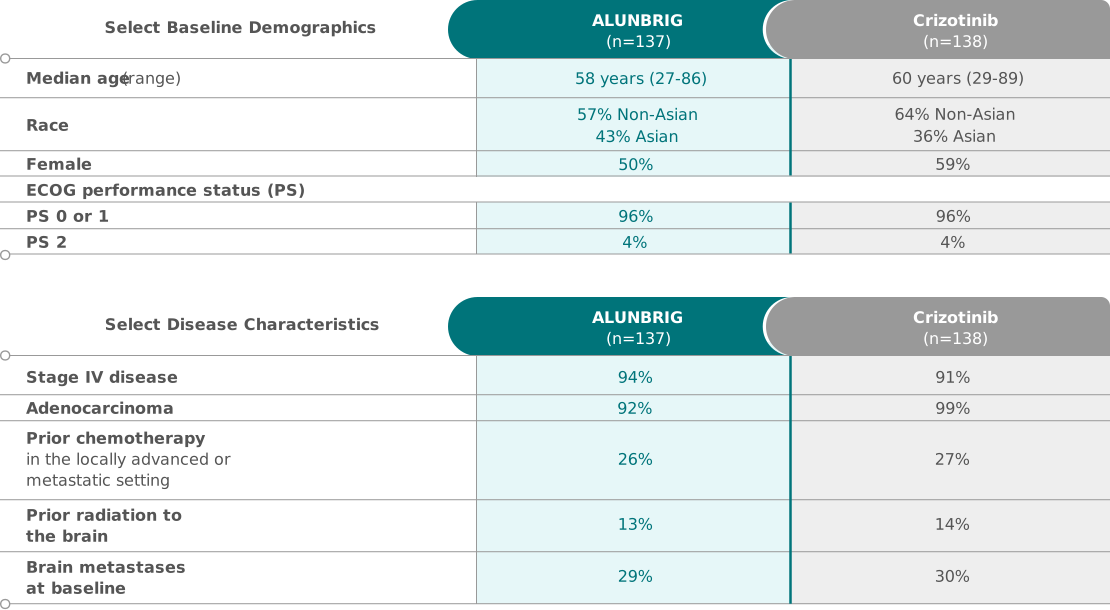
aPatients in ALTA 1L exhibited characteristics that were common among real-world ALK+ mNSCLC patients, including high rates of adenocarcinoma, presence of brain metastases at baseline, and a preponderance of patients in their 50s.
First-line efficacy with ALUNBRIG® (brigatinib)
Review the systemic efficacy of ALUNBRIG with Dr. Mahdi Taha, including PFS and response rates in patients with ALK+ mNSCLC.
ViewHide Transcript
Hello, I’m Dr. Mahdi Taha. A medical oncologist in southern Florida. For patients with ALK+ metastatic NSCLC, managing disease progression is a key consideration when selecting a first-line treatment. ALUNBRIG (brigatinib) has demonstrated strong systemic efficacy with durable intracranial responses, helping to provide durable disease control in these patients with advanced disease. In this video, we’ll take a closer look at the systemic efficacy of ALUNBRIG in the ALTA 1L trial and what it means for patients.
Let’s begin by looking at the design of the study. ALTA 1L was a randomized, Phase 3, open-label study comparing ALUNBRIG to crizotinib in adult patients with advanced ALK+ NSCLC who have not been previously receiving an ALK-targeted therapy. Patients were randomized one-to-one to receive ALUNBRIG 180 mg orally once daily with a 7-day lead-in at 90 mg once daily or crizotinib 250 mg orally twice daily.
Patients were stratified by the presence of baseline CNS metastases and prior chemotherapy in the locally advanced and/or metastatic setting. Patients with a history of interstitial lung disease, drug-related pneumonitis, or radiation pneumonitis were excluded from the study. Treatment was continued until disease progression or unacceptable toxicity.
In the ALTA 1L trial, ALUNBRIG demonstrated powerful systemic efficacy vs crizotinib. The primary endpoint was Progression-free survival assessed by a Blinded Independent Review Committee. ALUNBRIG more than doubled the median PFS compared to crizotinib demonstrating a median PFS of 24 months vs 11 months. Based on the final analysis, the investigator-assessed median PFS was 30.8 months with ALUNBRIG vs 9.2 months with crizotinib.
The rate and durability of response was also assessed in the ITT population. With ALUNBRIG, we saw a significantly higher overall response rate of 74%, compared to 62% with crizotinib. In those patients that responded, ALUNBRIG demonstrated a durable response nearly 2.5 times longer than crizotinib. The median duration of response was 33.1 months with ALUNBRIG compared to 13.8 months with crizotinib.
ALUNBRIG is a proven first-line treatment choice for patients with ALK+ metastatic NSCLC. With its demonstrated clinical benefits, including durable progression-free survival and sustained responses, ALUNBRIG is a strong option for your next appropriate patient.
ITT population
ALUNBRIG Demonstrated Powerful Systemic Efficacy in ALTA 1L
Systemic PFS With ALUNBRIG vs Crizotinib1
Confirmed BIRC-assessed response rates in the ITT population1:
ALUNBRIG (n=101/137) and crizotinib (n=85/138)
- ORR: 74% (95% CI: 66, 81) vs 62% (95% CI: 53, 70) with crizotinib; P=0.0342b
— CR: 15% (95% CI: 9, 22) vs 9% (95% CI: 5, 15) with crizotinib
— PR: 59% (95% CI: 50, 67) vs 53% (95% CI: 44, 61) with crizotinib - mDOR: 33.1 months (95% CI: 22.0, NE) vs 13.8 months (95% CI: 10.4, 20.8) with crizotinib in the final analysis
BIRC-assessed ITT population1
High Response Rates and Durable Responses
Significantly Higher Confirmed ORR vs Crizotinib1

ALUNBRIG (n=101/137)
15% complete response
(95% CI: 9, 22)

crizotinib (n=85/138)
9% complete response
(95% CI: 5, 15)
P=0.0342b
bStratified by presence of brain metastases at baseline and prior chemotherapy for locally advanced or metastatic disease for log-rank test and Cochran Mantel-Haenszel test, respectively.
Final analysis with 40.4 months of median follow-up in the ITT population5
ALUNBRIG Demonstrated ~2.5x Longer Median DOR vs Crizotinib
Median DOR was nearly 20 months longer with ALUNBRIG vs crizotinib1
- ALUNBRIG 33.1 months (95% CI: 22.0, NR) vs crizotinib 13.8 months (95% CI: 10.4, 20.8)1
Overall Survival
Median OS not reached for either arm1:
- 30% of patients (n=41/137) died in the ALUNBRIG arm vs 37% of patients (n=51/138) in the crizotinib arm1,5
- The 3-year OS rate was 71% (95% CI: 62, 78) with ALUNBRIG and 68% (95% CI: 59, 75) with crizotinib (HR=0.81; 95% CI: 0.53, 1.22; P=0.331)5
47% of patients (n=65) in the crizotinib arm had crossed over to receive ALUNBRIG.5
Real Patient Case Study: Katie

Quality of Life
Explore how ALUNBRIG may impact a patient's quality of life
1L, first-line; ALK, anaplastic lymphoma kinase; ALK+, ALK-positive; BIRC, blinded independent review committee; CI, confidence interval; CNS, central nervous system; CR, complete response; DOR, duration of response; ECOG, Eastern Cooperative Oncology Group; HR, hazard ratio; INV, investigator; ITT, intent-to-treat; mDOR, median DOR; mPFS, median PFS; NE, not estimable; NR, not reached; NSCLC, non-small cell lung cancer; ORR, overall response rate; OS, overall survival; PFS, progression-free survival; PS, performance status; RECIST, Response Evaluation Criteria in Solid Tumors.